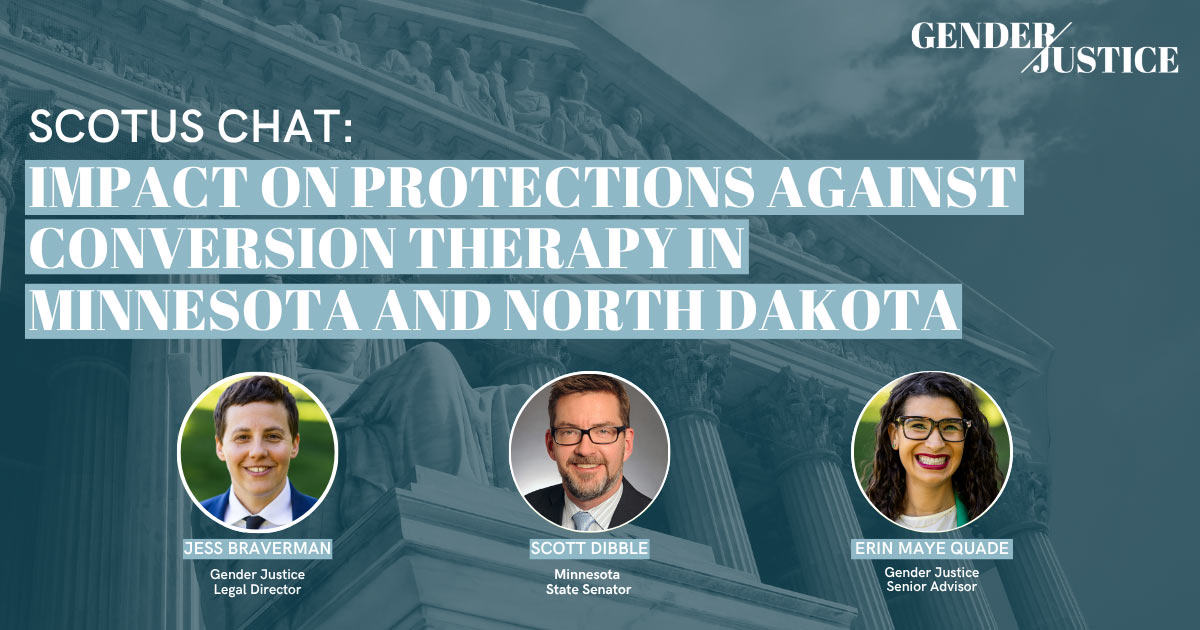
On March 31, 2026, the U.S. Supreme Court issued a decision in Chiles v. Salazar, dealing a major blow to Colorado’s ban on conversion therapy — a dangerous and discredited practice that harms LGBTQ+ youth.
Gender Justice Legal Director Jess Braverman, Gender Justice Senior Advisor Erin Maye Quade, and Minnesota State Senator Scott Dibble (chief author of Minnesota’s conversion therapy ban) discuss the impact of this decision in Minnesota and North Dakota and how we move forward. Below, watch the full conversation and read our top takeaways.
1. This decision will weaken Minnesota and North Dakota’s protections against conversion therapy — but won’t eliminate them.
This decision does not automatically end protections against conversion therapy in Minnesota or North Dakota. Minnesota’s state law banning conversion therapy still stands. North Dakota’s Board of Social Work Examiners policy of considering conversion therapy an ethics violation still stands.
However, this decision invites legal attacks on these protections. And given the Chiles v. Salazar decision, the U.S. Supreme Court is unlikely to allow bans on conversion talk therapy to stand.
2. We will keep fighting for our kids’ safety — and we have strong tools in that fight.
There is a reason over two dozen states, Puerto Rico, and D.C. have banned or limited conversion therapy and every major medical association has condemned it. This is a discredited and deeply harmful practice. By weakening protections, the Court’s decision puts kids back in harm’s way and blocks states from setting and enforcing basic standards for ethical mental health care.
We will keep fighting for every child’s right to grow up safe, affirmed, and supported. And we have strong tools in that fight.
- Minnesota’s conversion therapy ban includes two elements — a block on false advertising of conversion therapy and a block on using taxpayer dollars to fund conversion therapy — that are not impacted by this decision.
- Minnesota legislators are also working to pass bills that would block private insurance funding for conversion therapy and would facilitate a path for people harmed by conversion therapy to seek damages (simultaneously supporting legal recourse and discouraging the practice in the first place).
- Professional licensure boards, including boards that license therapists, continue to have the ability to censure and de-license folks engaging in dangerous and unethical practices. Reporting harmful behavior remains effective.
This is a heavy moment, and for LGBTQ+ youth and adults who have been subjected to conversion therapy, that weight is deeply personal. But this fight is not over. Together, we will stand with our LGBTQ+ neighbors and defend every child’s right to safety, dignity, empowerment, and affirmation.
Take Action
- Attend a Trans Equity Training where allies can learn how to have effective discussions in support of trans rights, discover ways to take action, and connect with others passionate about the fight for trans equity and empowerment.
- Learn about how schools and educators can step up for trans youth.
- Sign up to hear about future SCOTUS Chats discussing cases impacting LGBTQ+ rights, gender equity, and reproductive freedom.
Recent Commentary
- Open Letter to North Dakota Leaders: We Stand With Trans Youth
- Case Update: Fighting for Workers Rights at the Minnesota Supreme Court
- SCOTUS Ruled Against Trans Kids. What’s Next in the Fight for Every Kid’s Right to Play
- Spring 2026 Newsletter
- The Title IX Fight Isn’t Just About Sports. It’s About Civil Rights.
- SCOTUS Hears Trans Sports Cases
- How Schools and Educators Can Step Up for Trans Youth
- Three Things to Know About the Landmark Cooper v. USA Powerlifting Win
- Why the ERA Can’t Wait: Voices from the Minnesotans for Equal Rights Coalition
- Fall 2025 Newsletter & Annual Report
Learn more about the topics on this page
Related Content
Open Letter to North Dakota Leaders: We Stand With Trans Youth

Case Update: Fighting for Workers Rights at the Minnesota Supreme Court
In Minnesota, and across the country, personal religious beliefs are increasingly being weaponized to weaken people’s civil rights — threatening their ability to participate in public life, get the health care they need, and keep their jobs and livelihoods.
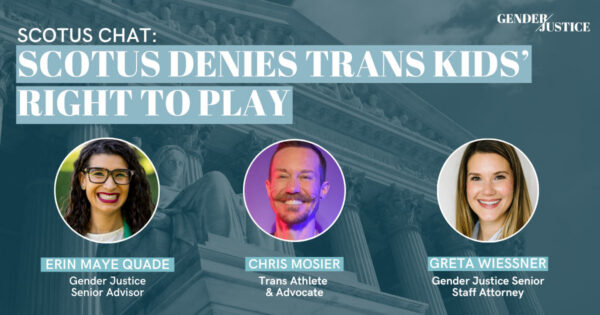
SCOTUS Ruled Against Trans Kids. What’s Next in the Fight for Every Kid’s Right to Play
On June 30, 2026, the U.S. Supreme Court issued a devastating ruling in West Virginia v. B.P.J. and Little v. Hecox, leaving transgender girls behind. Watch our SCOTUS Chat to learn more, or read on for what you need to know.

Milestones of Progress
Our organization has celebrated some big wins over the years and we continue to grow in the ways we harness strategic impact litigation, legislative advocacy, and education to push the law forward when it comes to gender equality. Check out what we’ve accomplished, together.