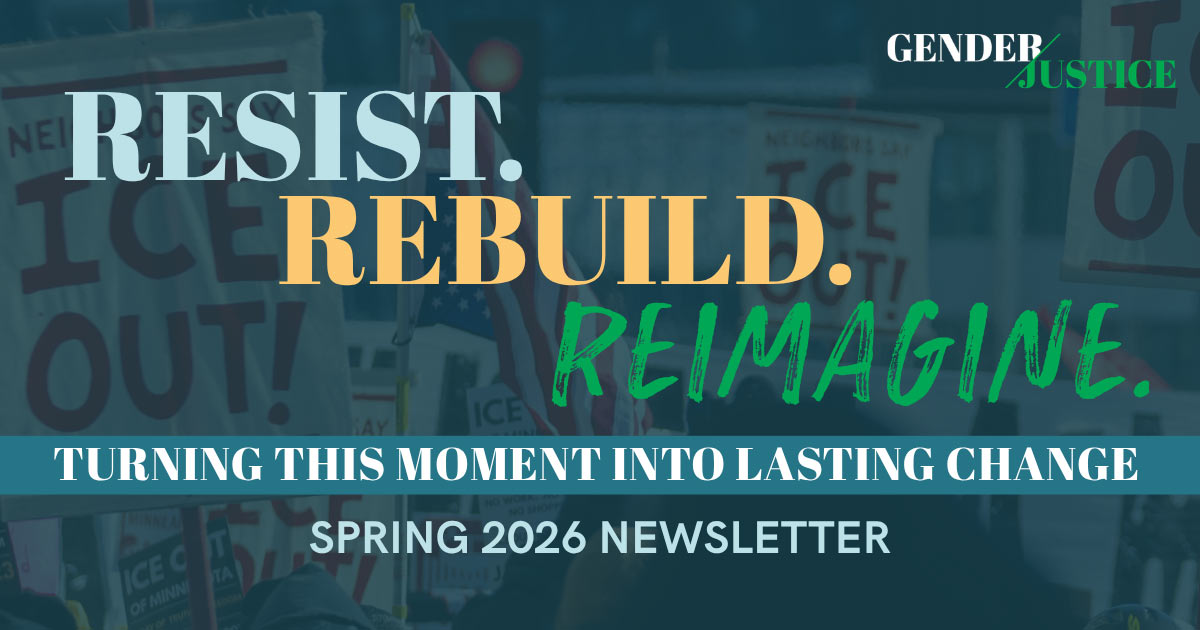
READ THE SPRING 2026 NEWSLETTER HERE
Dear Supporters,
 We are living through something extraordinary.
Facing wave after wave of state violence, it would be easy to assume the direction of change is toward more authoritarianism. I don’t believe that’s inevitable. What I see — in Minnesota and across the country — is people coming together not only to resist, but to rebuild and reimagine, even as we fight for our lives.
We saw it here. When Operation Metro Surge launched, Minnesotans mobilized massive networks of neighbors and mutual aid. It wasn’t just a rejection of the violent, white supremacist worldview ICE embodies — it was a deepening of our commitment to one another. Fighting for our neighbors’ rights as our own. Together, we forced a drawdown. The threat isn’t over, but we proved something important: organized people are powerful.
Now, we’re doing the long work of recovery and accountability. We honor our neighbors Renée Good, Alex Pretti and Victor Manuel Díaz by demanding more than a return to the status quo — by building toward something better.
The Minnesota Equal Rights Amendment is a key piece of that work: a way to defend our rights today and assert a clear vision that Minnesota’s own resources, laws and institutions will never be weaponized against our own people — and embed that vision directly in our state’s constitution, where it cannot be easily rolled back by shifting political winds.
What gives me hope is that this pairing — fierce resistance while building the foundations for something better — isn’t new. It’s a signature of movements for racial justice, immigrant rights, trans liberation, indigenous sovereignty, and reproductive freedom. At Gender Justice, we channel that same determination through the law — building legal frameworks that don’t just push back against today’s attacks, but make equality harder to dismantle tomorrow.
We see that in the story of Cooper v. USA Powerlifting. In 2019, our client took a stand against discrimination that blocked her from participating in the sport she loved. Her persistence brought us all the way to the Minnesota Supreme Court — where, this fall, we won a ruling that didn’t just affirm trans athletes’ right to compete. It established a clear legal precedent: in Minnesota, trans people have the right to participate authentically in every part of public life.
That’s the work. And we’re not done. We’ve appealed T.D. v. Wrigley to the North Dakota Supreme Court, challenging the state’s ban on gender-affirming care for trans youth — a ban that criminalizes doctors and overrides North Dakotans’ constitutional right to liberty and self-determination. We’ve seen this argument win: Montana’s Supreme Court recently struck down a similar ban on state constitutional grounds.
None of this comes easy. The forces working against us are coordinated and well-resourced. But I’ve seen what’s possible when people refuse to accept the world as it is. In courtrooms, in the streets, in the Capitol — in Minnesota and North Dakota — we are proving that freedom and dignity are worth defending, and worth building toward. As long as we keep showing up for one another, I believe we will do just that.
A better world is possible. Together, we’re already building it. Thank you for all the ways — big and small — you’re showing up today, tomorrow, and for our future.
In solidarity,
Megan Peterson
Executive Director
Recent Commentary
- Case Update: Fighting for Workers Rights at the Minnesota Supreme Court
- SCOTUS Ruled Against Trans Kids. What’s Next in the Fight for Every Kid’s Right to Play
- Impact on Protections Against Conversion Therapy in Minnesota and North Dakota
- The Title IX Fight Isn’t Just About Sports. It’s About Civil Rights.
- SCOTUS Hears Trans Sports Cases
- How Schools and Educators Can Step Up for Trans Youth
- Three Things to Know About the Landmark Cooper v. USA Powerlifting Win
- Why the ERA Can’t Wait: Voices from the Minnesotans for Equal Rights Coalition
- Fall 2025 Newsletter & Annual Report
- Anti-LGBTQ+ Censorship in Public Schools
Learn more about the topics on this page
Related Content
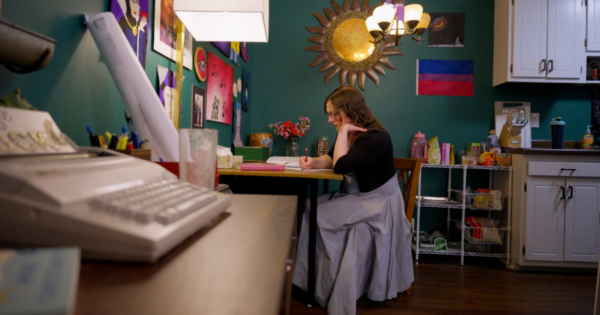
Case Update: Fighting for Workers Rights at the Minnesota Supreme Court
In Minnesota, and across the country, personal religious beliefs are increasingly being weaponized to weaken people’s civil rights — threatening their ability to participate in public life, get the health care they need, and keep their jobs and livelihoods.
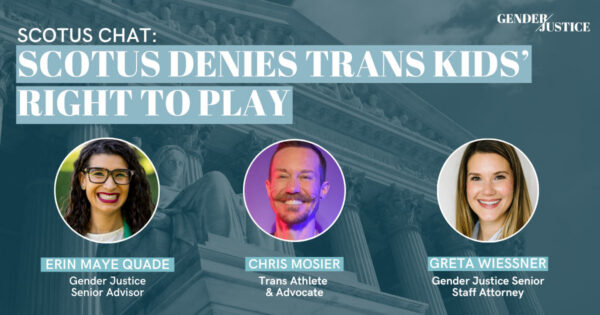
SCOTUS Ruled Against Trans Kids. What’s Next in the Fight for Every Kid’s Right to Play
On June 30, 2026, the U.S. Supreme Court issued a devastating ruling in West Virginia v. B.P.J. and Little v. Hecox, leaving transgender girls behind. Watch our SCOTUS Chat to learn more, or read on for what you need to know.
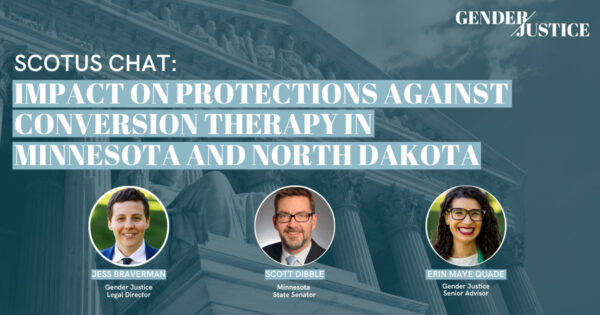
Impact on Protections Against Conversion Therapy in Minnesota and North Dakota
On March 31, 2026, the U.S. Supreme Court issued a decision in Chiles v. Salazar, dealing a major blow to Colorado’s ban on conversion therapy — a dangerous and discredited practice that harms LGBTQ+ youth.

Milestones of Progress
Our organization has celebrated some big wins over the years and we continue to grow in the ways we harness strategic impact litigation, legislative advocacy, and education to push the law forward when it comes to gender equality. Check out what we’ve accomplished, together.