Bathroom Safety & Bystander Support: Responding to Anti-Trans Harassment
Public bathrooms should be safe for everyone. But for many transgender and gender nonconforming people, they can be sites of harassment or questioning. Whether you’re a person being targeted for harassment or a witness, understanding how to respond in these situations with small actions can make a big difference.
If You’re Harassed or Your Gender Is Questioned
You have a right to be there. You’re not doing anything wrong. In Minnesota, the law protects everyone from discrimination in places of public accommodations, including public bathrooms. The problem is the harassment, not you.
Stay calm (if you can)
Take a breath. Feeling scared, shaken, or angry is normal. If someone is yelling or threatening you, try to leave if it feels safe.
You don’t owe anyone an explanation
Your gender and your right to use the restroom aren’t up for debate. A simple “I’m just using the bathroom like everyone else” is enough. Or say nothing at all. You don’t have to justify or “prove” your gender to anyone.
Look for a way out
Trust your instincts. If you feel unsafe, head to a public or staffed area. Ask someone nearby to walk with you, alert a manager, or talk to security.
Document the incident (when it’s safe)
Note the time, place, and what happened. Include details of what was said or done. This can help if you decide to report the incident later.
Connect with support
Reach out to a friend, an LGBTQ+ support group, or legal resource. In Minnesota or North Dakota, Gender Justice offers legal help.
If You Witness Someone Being Harassed
There’s no need for heroic intervention, just small actions can change the situation.
Distract
Interrupt the interaction without directly confronting the harasser. Ask for directions or where someone got their shoes, start a casual conversation, or create a diversion. Remain in the space and don’t leave the harasser alone with their target.
Delegate
Ask someone to grab a staff member, security, or another bystander to help.
Document
If it’s safe and appropriate, discreetly record or take notes afterwards. Always offer the targeted person any video or notes. Do not post anything online without explicit permission.
Delay
If you couldn’t act in the moment, check-in afterward. Offer to walk with them or help them report it.
Direct
If it feels safe, calmly tell the harasser to stop. A simple “They have a right to be here. Please leave them alone” will work. Try to end the interaction there and avoid getting in a back and forth. Remember, the goal is to keep the targeted person safe, not escalate the situation.
Sources:
Learn more about the topics on this page
Related Content
Open Letter to North Dakota Leaders: We Stand With Trans Youth
Case Update: Fighting for Workers Rights at the Minnesota Supreme Court
In Minnesota, and across the country, personal religious beliefs are increasingly being weaponized to weaken people’s civil rights — threatening their ability to participate in public life, get the health care they need, and keep their jobs and livelihoods.
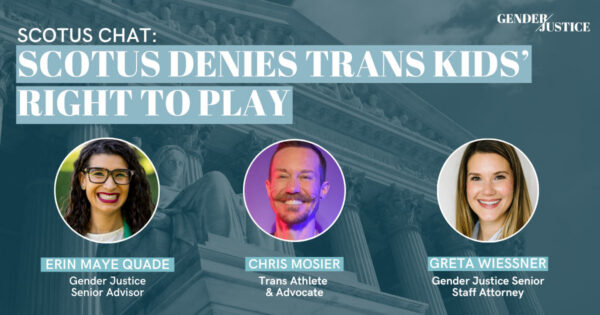
SCOTUS Ruled Against Trans Kids. What’s Next in the Fight for Every Kid’s Right to Play
On June 30, 2026, the U.S. Supreme Court issued a devastating ruling in West Virginia v. B.P.J. and Little v. Hecox, leaving transgender girls behind. Watch our SCOTUS Chat to learn more, or read on for what you need to know.

Milestones of Progress
Our organization has celebrated some big wins over the years and we continue to grow in the ways we harness strategic impact litigation, legislative advocacy, and education to push the law forward when it comes to gender equality. Check out what we’ve accomplished, together.